Host MCP Servers via HTTP SSE with APISIX
On this page
- Introduction
- Model Context Protocol (MCP) Overview
- What Is the mcp-bridge Prototype?
- How It Works and Architecture Diagram
- Application Scenarios and Benefits
- Authentication and Rate Limiting with Apache APISIX Plugins
- Authentication Plugins
- Rate-Limiting Plugins
- Adding Authentication and Rate Limiting to MCP Servers
- Roadmap
- Summary
Explore a prototype
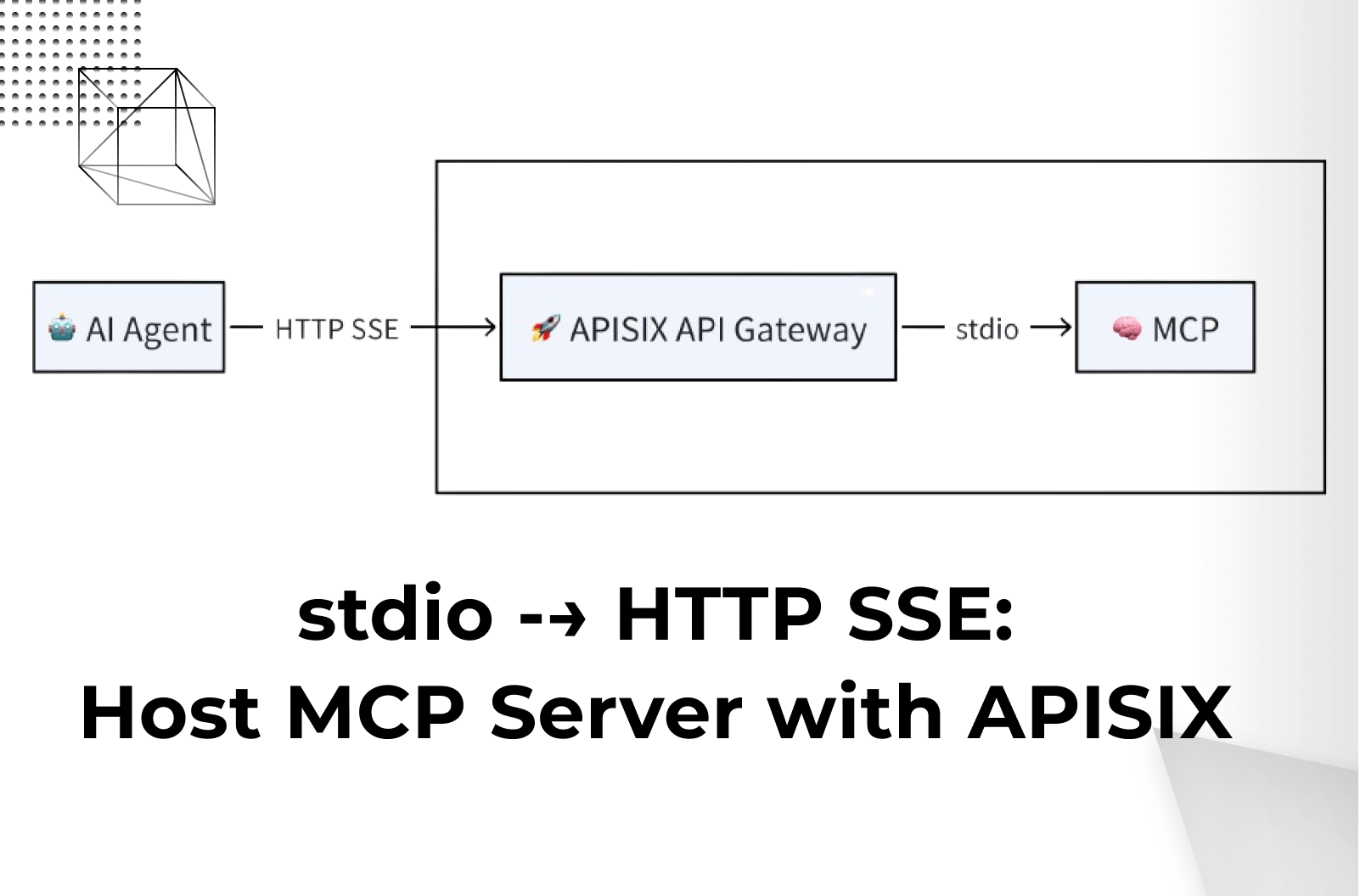
mcp-bridgeapproach for exposing stdio-based MCP servers over HTTP SSE and applying APISIX traffic controls around that traffic.
Introduction
In contemporary API infrastructure, HTTP protocols and streaming communications (like SSE, WebSocket) have become mainstream for building real-time, interactive applications. Over the past few months, the Model Context Protocol (MCP) has gained popularity. However, most MCP Servers are implemented via stdio for local environments and cannot be invoked by external services and developers.
To bridge these services with modern API architectures, this article discusses the mcp-bridge prototype. It converts stdio-based MCP services into HTTP SSE streaming interfaces and lets API gateway policies handle routing and traffic management around that traffic.
Model Context Protocol (MCP) Overview
MCP is an open protocol that standardizes how AI applications provide context information to large language models (LLMs). It allows developers to switch between different LLM providers while ensuring data security and facilitating integration with local or remote data sources. Supporting a client-server architecture, MCP servers expose specific functionalities that are accessible to clients via these servers.
What Is the mcp-bridge Prototype?
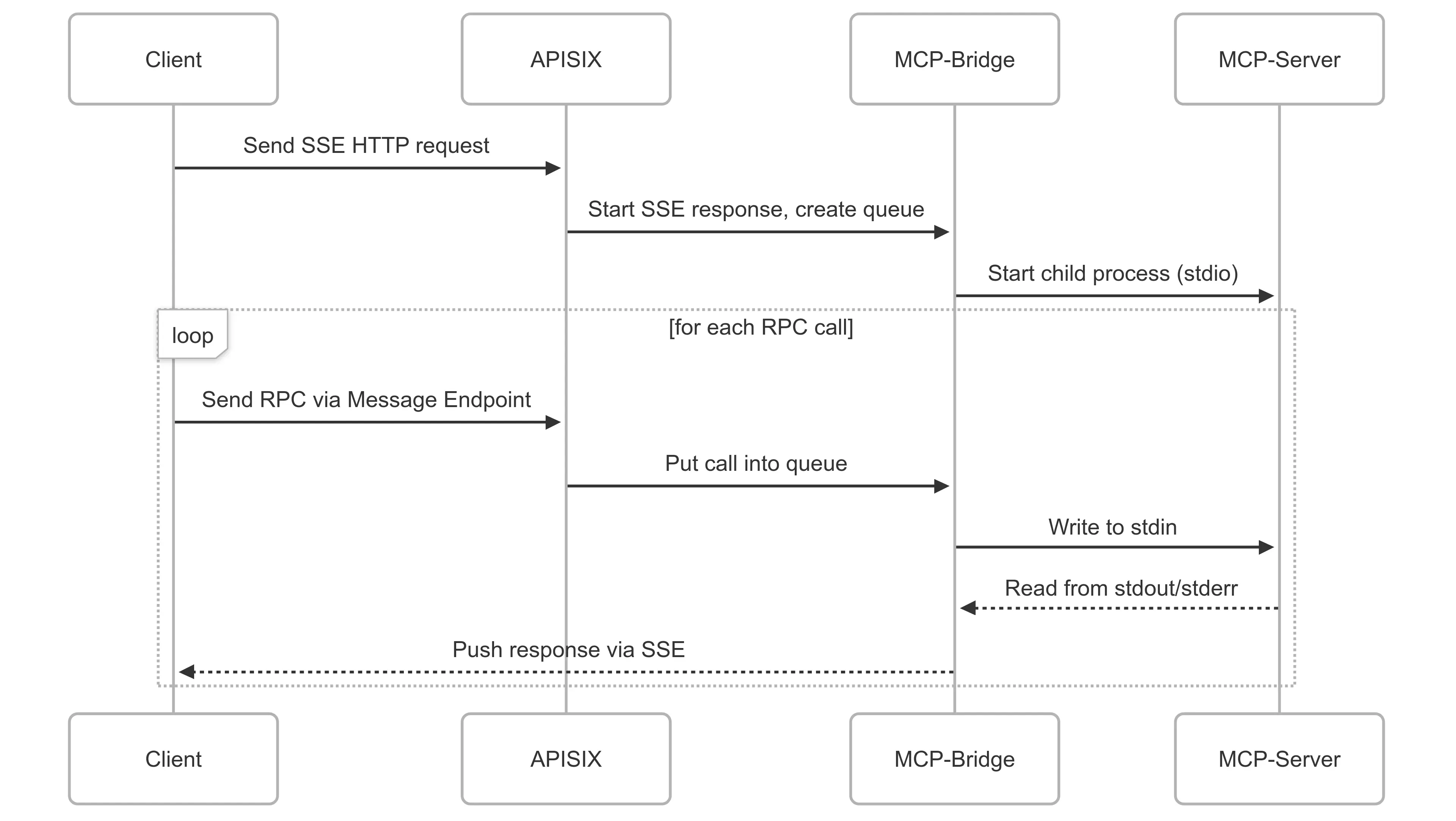
The mcp-bridge prototype launches a subprocess to manage the MCP Server, takes over its stdio channel, transforms client HTTP SSE requests into MCP protocol calls, and pushes responses back to the client via SSE.
This is not a dedicated MCP gateway product. It is an experimental bridge pattern for MCP-to-HTTP traffic where APISIX can still provide routing, authentication, rate limiting, and observability around HTTP-facing services.
Key features:
- 📡 Wraps MCP RPC calls into SSE message streams
- 🔄 Manages subprocess stdio lifecycle with queued RPC scheduling
- 🗂️ Lightweight MCP session management (including session ID, ping keep-alive, and queuing)
- 🧰 Supports session sharing across multiple workers for stability in APISIX multi-worker environments
How It Works and Architecture Diagram
Below is a sequence diagram illustrating the working mechanism of mcp-bridge, helping you to understand the data flow from stdio to SSE:
✅ Highlights:
- APISIX manages SSE long-lived connections
mcp-bridgehandles subprocesses, stdio, and scheduling queues- Clients receive real-time subprocess outputs, forming streaming SSE responses
Application Scenarios and Benefits
✅ Typical Application Scenarios
- 🛠️ Integrating existing MCP/stdio services with web platforms
- 🖥️ Cross-language and cross-platform subprocess service management
✅ Benefits
- 🌐 Modernization: Instantly transform stdio services into HTTP SSE APIs
- 🕹️ Managed: Unified management of subprocess launch and IO lifecycle
- 📈 Scalability: Session sharing in multi-worker environments for large-scale deployment support
- 🔄 Traffic Control Integration: Seamless API management system integration with APISIX traffic control, authentication, and rate-limiting plugins
Authentication and Rate Limiting with Apache APISIX Plugins
Apache APISIX provides robust authentication plugins (like OAuth 2.0, JWT, and OIDC) and rate-limiting plugins (such as rate limiting and circuit breakers). These policies can protect the HTTP-facing traffic around MCP services.
Authentication Plugins
- Support for OAuth 2.0, JWT, and OIDC plugins to protect APIs and MCP services.
- Automatic client identity verification during API gateway requests to prevent unauthorized access.
Rate-Limiting Plugins
- Rate Limiting: Restricts each client’s request rate to prevent system overload.
- Circuit Breaker: Automatically switches or returns errors to avoid system crashes during high traffic or failures.
Adding Authentication and Rate Limiting to MCP Servers
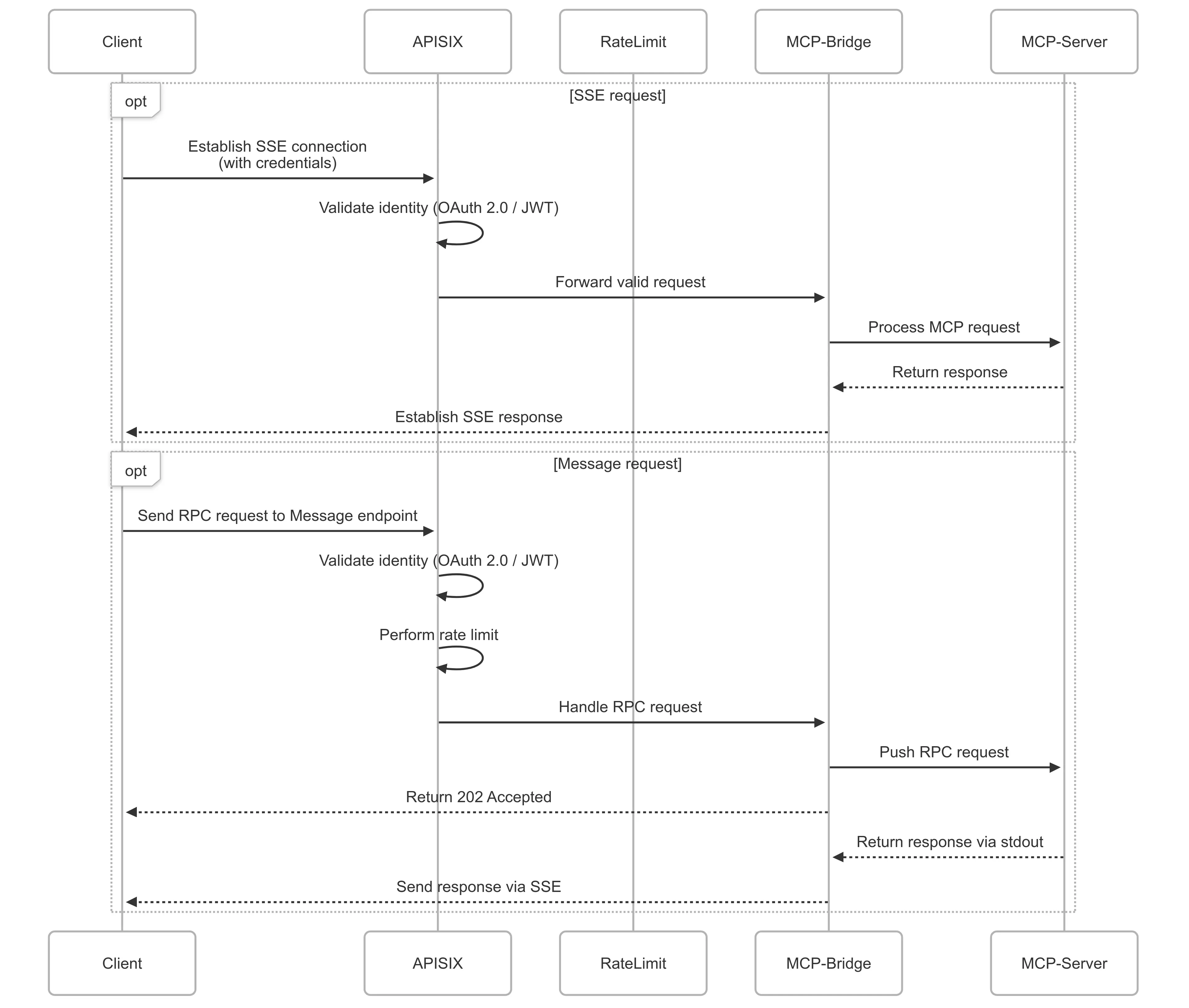
By applying authentication and rate-limiting policies at the gateway layer, you can improve API security and system stability in high-concurrency environments.
Roadmap
The current version is a prototype. Future enhancements include:
-
Currently, MCP sessions are not shared across multiple APISIX instances. For multi-node APISIX clusters, proper session persistence configuration on the front-end load balancer is essential to ensure requests from the same client always go to the same APISIX instance.
-
The current MCP SSE connection is loop-driven. While the loop doesn’t consume many resources (stdio read/write will be synchronous non-blocking calls), it’s not efficient. We plan to connect to a message queue for an event-driven, scalable cluster approach.
-
The MCP session management module is just a prototype. We intend to abstract an MCP proxy server module to support launching MCP servers within APISIX for advanced scenarios. This proxy server module will be event-driven rather than loop-driven.
Summary
The mcp-bridge prototype explores how Model Context Protocol (MCP) services can be exposed through HTTP-facing interfaces while still benefiting from gateway-level traffic policies.